A loud exhaust can make a good car feel rough fast. One day, the vehicle sounds normal. Then you start hearing a deeper rumble, a rattle under the floor, or a sharp exhaust note every time you accelerate.
The muffler might be the problem, but that doesn't necessarily mean it has to be replaced. Sometimes a repair makes sense. Other times, the metal is too rusted, cracked, or broken to trust for much longer.
What The Muffler Actually Does
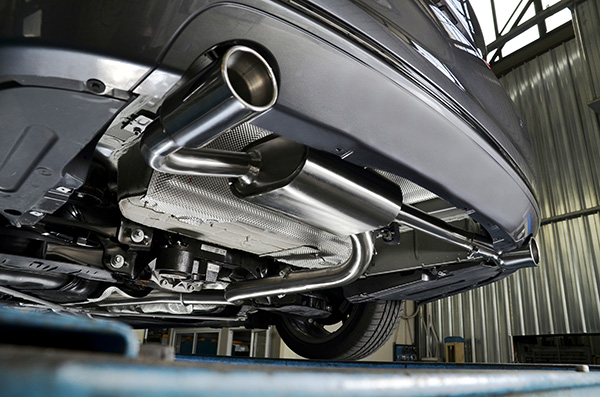
The muffler quiets the exhaust before it leaves the tailpipe. Exhaust gases leave the engine in pulses, and the muffler uses chambers, tubes, and packing material to reduce the noise. Without it, the car sounds much louder and harsher.
It also helps keep exhaust routed safely out the back of the vehicle. The muffler is not the same as the catalytic converter, and it does not clean emissions the way the converter does. Its job is noise control and proper exhaust flow. When it fails, the first clue is usually sound.
When Muffler Repair Makes Sense
Muffler repair can be the right call when the damage is small, and the rest of the exhaust is still solid. A loose hanger, a small crack, a minor seam leak, or a damaged clamp can sometimes be repaired without replacing the entire muffler. If the metal around the damaged area is still strong, a focused fix can save money.
This is where an inspection is useful. Our technicians check whether the problem is the muffler itself, a pipe connection, a bracket, or a hanger that lets the exhaust shift out of place. A rattle that sounds like a bad muffler might only be a loose shield or worn mount.
When Muffler Replacement Is The Better Choice
Replacement makes more sense when the muffler is rusted through, split open, crushed, or falling apart internally. If the shell is thin and flaky, patching one spot will not buy much time. The next weak area is already waiting.
Internal failure is another reason to replace it. A muffler can look decent on the outside and still rattle on the inside because baffles or packing have broken loose. If the sound is coming from inside the muffler body, there is not much to repair. Replacing it is the cleaner fix.
Rust Changes The Decision Fast
Rust is one of the biggest reasons muffler repair turns into replacement. Exhaust parts live under the car where they deal with water, road grime, salt, heat, and constant temperature changes. Moisture also collects in the exhaust during short trips because the system does not always reach high enough temperatures to fully dry out.
A small hole in clean metal is one thing. A small hole surrounded by soft, rusty metal is different. Welding or patching weak metal rarely holds well. In our shop, we inspect the surrounding pipe and seams before deciding whether to repair.
Sounds That Point To Muffler Trouble
A failing muffler can change the way the vehicle sounds in several ways. A deep rumble from the rear can point toward a hole in the muffler or tailpipe. A sharp tapping or puffing sound can point toward a leak at a seam or connection. A metallic rattle can point toward broken internal parts or loose hardware.
Pay attention to when the sound happens. If it gets louder under acceleration, the exhaust pressure is making the leak easier to hear. If it rattles at idle but quiets down while driving, a loose hanger or internal muffler part could be moving at a certain vibration. Those details help narrow the source.
Why Exhaust Leaks Need A Careful Look
Not every exhaust leak is only a noise problem. If the leak is farther forward, exhaust gases can get closer to the cabin, especially when the vehicle is stopped or idling. A leak near the engine, converter, or mid-pipe needs faster attention than a small tailpipe issue at the rear.
You might also smell exhaust, notice a change in fuel economy, or hear a ticking sound under the vehicle. If the exhaust smell is entering the cabin, do not keep driving around with the windows up and hoping it fades. The leak needs to be found and repaired properly.
Do Not Forget The Parts Around The Muffler
The muffler does not hang under the car on its own. Hangers, rubber mounts, clamps, flanges, gaskets, and pipes all support it. If those parts wear out, the muffler can sag, bang against the body, or place stress on nearby connections.
Regular maintenance is a good time to look underneath for loose hangers, rusted clamps, and early exhaust leaks. A small hardware repair can prevent the muffler from bouncing around until something cracks. That is a much better outcome than replacing a muffler that failed because it was never supported correctly.
Get Muffler Repair In Fort Madison, IA, With Griffin Muffler & Brake Center
If your vehicle has gotten louder, started rattling, or smells like exhaust, Griffin Muffler & Brake Center in Fort Madison, IA, can check the muffler, pipes, hangers, and connections to see whether repair or replacement makes more sense.
Bring it in before a small exhaust leak turns into a louder, more expensive problem under the car.