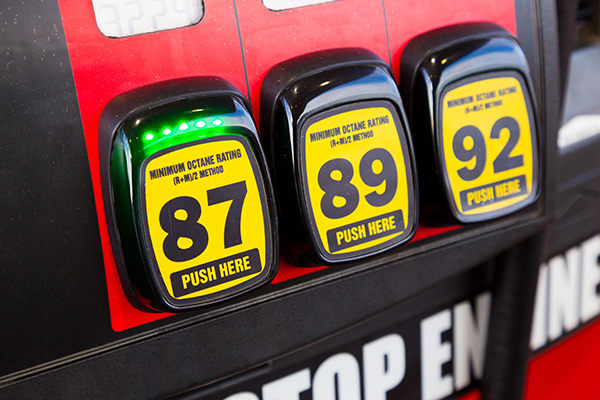
We’ve all seen the numbers on the gas station signs lately, and they aren't pretty. As of April 2026, we’re seeing national averages for regular unleaded hovering around $4.11 per gallon, with premium reaching well over $5.00 in many states. When you’re staring at a $20 difference for a single fill-up, it’s incredibly tempting to grab the yellow handle and save a few bucks.
But if your car has a "Premium Fuel Only" sticker, you might feel like you're playing a dangerous game of Russian roulette with your engine. Let’s pull back the curtain on what’s actually happening inside your engine when you make that switch.
The "Octane" Mystery: It's Not About Quality
A common misconception we hear is that premium gas is "cleaner" or "higher quality" than regular. In reality, the octane rating (87, 89, or 91/93) is a measure of stability.
High-performance engines—especially those with turbochargers—compress the air and fuel much more tightly before they ignite. Regular gas is less stable under that kind of pressure. If it gets squeezed too hard, it can explode prematurely, before the spark plug even fires. This creates a shockwave that hits your engine's pistons while they’re still moving up, resulting in a metallic "pinging" or "knocking" sound.
The Modern Engine’s "Survival Mode"
The good news is that cars built in the last 15 to 20 years are incredibly smart. Your car is equipped with "knock sensors" that act like a digital nervous system. If you put regular gas in a premium-required car, the sensors will hear that tiny knock before you ever do.
To protect itself, the car's computer (the ECU) will instantly "retard" the spark timing. This stops the knocking, but it comes at a cost:
- Reduced Power: You’ll notice the car feels sluggish, especially when merging onto the highway or climbing hills.
- Lower MPG: Because the engine isn't running at its peak efficiency, you’ll actually burn through a tank of gas faster.
- Heat Stress: Even though the computer adjusts, the engine often runs hotter, which can lead to faster wear on your oil and cooling system.
"Required" vs. "Recommended": The Deciding Factor
Before you decide to save those few dollars at the pump, you need to check your owner’s manual for these two specific words:
Premium Recommended
If your manual says premium is recommended, the manufacturer is telling you the car will perform best on 91 octane, but it’s designed to run safely on 87. In this case, using regular gas during these high-price months is a perfectly viable strategy.
Premium Required
This is a firm directive. Engines with this label have such high compression that regular gas might push the knock sensors to their absolute limit. While the car might run, you are essentially forcing it into a perpetual state of "emergency adjustment," which can lead to carbon buildup and damage to the piston rings over time.
Is the Saving Strategy Actually Working?
Here’s the part that usually surprises our customers: the math doesn't always add up. If you save 15% at the pump by switching to regular, but your engine’s efficiency drops by 15% due to the computer retarding the timing, you haven’t saved a dime. In fact, you might be paying more per mile while putting more stress on your engine.
If you’re determined to save money at the pump right now, we suggest a middle-ground approach:
Drive Gently
Avoiding "flooring it" reduces the pressure inside the cylinders, making it easier for lower-octane fuel to behave.
Top Tier Only
Whether you choose regular or premium, always look for the "Top Tier" logo. These fuels have higher detergent levels that keep your valves and injectors clean, which is even more important when you aren't using the fuel the car was built for.
The Shop’s Perspective
In the short term, one or two tanks of regular gas in a premium car won't cause your engine to melt down. However, making it a permanent habit in a car that "Requires" premium is a gamble. We’ve seen engines come in with cracked spark plug porcelain and damaged pistons because the driver ignored the "Required" label for too long, saving a few hundred dollars a year.
Is your car acting sluggish or making a strange "ticking" sound after your last fill-up? Whether you’re trying to navigate high gas prices or just want to make sure your engine is healthy, we’re here to help. Stop by Griffin Muffler & Brake Center in Fort Madison, IA today for a quick diagnostic or a performance check-up.