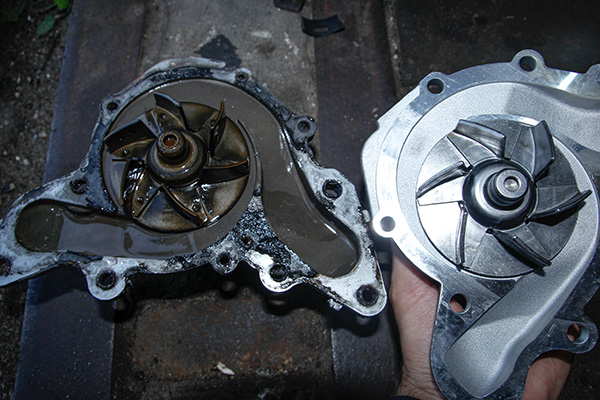
A bad water pump can turn a normal drive into an overheating problem faster than many drivers expect. The engine may seem fine at first, then the temperature gauge starts climbing, the heater blows strangely, or you notice a sweet smell after parking. Those clues can be easy to dismiss until the engine gets too hot.
The water pump keeps coolant moving through the engine, radiator, heater core, and hoses. When it leaks, wears out, or fails to circulate coolant properly, heat builds up inside the engine. Catching the signs early can help prevent gasket damage, warped parts, and repairs that cost much more than the original cooling system problem.
What The Water Pump Does In The Cooling System
The water pump circulates coolant through the engine to carry away heat. Coolant absorbs heat as it passes through the engine, then releases that heat through the radiator. Without a steady flow, hot spots can form inside the engine.
Some water pumps are driven by a belt, while others are electric. Either design has to move coolant at the right rate and pressure. If the pump weakens, leaks, or fails internally, the cooling system cannot do its job. That is when overheating symptoms can begin.
Engine Overheating From Poor Coolant Circulation
A rising temperature gauge is one of the biggest signs of cooling system trouble. If the gauge climbs higher than normal, especially in traffic, on hills, or during longer drives, coolant may not be circulating correctly. A failing water pump can cause that kind of temperature change.
Overheating should never be ignored. Heat can damage the head gasket, cylinder head, seals, hoses, radiator, and internal engine parts. If the temperature warning light comes on or the gauge moves toward hot, it is safer to pull over, shut the engine off, and let it cool before driving farther.
Coolant Leak Near The Water Pump
Many water pumps develop leaks as seals wear out. You may see coolant dripping near the front of the engine, collecting under the vehicle, or leaving crusty residue around the pump area. Coolant can be green, orange, pink, blue, or another color, depending on the vehicle.
A small coolant leak can still be serious. Once the level drops, the cooling system can pull in air and lose pressure. That can cause uneven temperatures and make overheating more likely. Topping off coolant may help temporarily, but the leak still needs to be found and repaired.
Grinding Or Whining Noise From The Water Pump
A water pump has bearings that allow the pulley or internal shaft to spin. When those bearings wear, the pump can start making noise. Drivers may hear grinding, whining, or a rough sound from the front of the engine.
Noise from that area can also come from the belt, tensioner, idler pulley, alternator, or A/C compressor. That is why an inspection matters before replacing parts. If the water pump bearing is failing, waiting too long can lead to more leakage, belt problems, or complete pump failure.
Heater Problems Can Point To Coolant Flow Trouble
The cabin heater uses hot coolant to warm the air inside the car. If the coolant is not moving properly, the heater may blow cool air even after the engine warms up. You may also notice heat that comes and goes, especially when the engine temperature starts acting unusually.
Weak heat can come from low coolant, trapped air, a clogged heater core, thermostat trouble, or blend door problems. Still, when poor heater performance appears with rising engine temperature, the cooling system needs attention. The water pump should be part of that check.
Warning Signs Of Water Pump Failure
Symptoms of a water pump can overlap with those of other cooling system problems. A few signs are especially worth watching:
- The temperature gauge is running higher than normal
- Coolant puddles under the vehicle
- Sweet smell after driving
- Grinding or whining near the front of the engine
- Steam from under the hood
- Heater blowing cold air
- Coolant level dropping between services
These signs do not always indicate a bad water pump, but they do show that the cooling system needs testing. Regular maintenance can catch coolant leaks, weak hoses, worn belts, and old coolant before they lead to overheating.
Why Water Pump Testing Should Come Before Repair
A car can overheat for several reasons. A stuck thermostat, clogged radiator, bad radiator cap, weak cooling fan, low coolant, leaking hose, or a head gasket issue can all cause symptoms that mimic water pump failure. Replacing the water pump without testing can miss the actual cause.
A proper cooling system check may include a pressure test, coolant level check, leak inspection, belt check, fan operation test, thermostat review, and a look at coolant flow. The goal is to find the reason the engine is overheating, not only to replace the part that seems most likely.
Get Water Pump Repair In Fort Madison, IA, With Griffin Muffler & Brake Center
If your vehicle is overheating, leaking coolant, making front-engine noise, or showing signs of poor coolant flow, Griffin Muffler & Brake Center in Fort Madison, IA, can check the water pump and cooling system.
For water pump repair or cooling system service before heat causes more damage, contact us to schedule an appointment.